




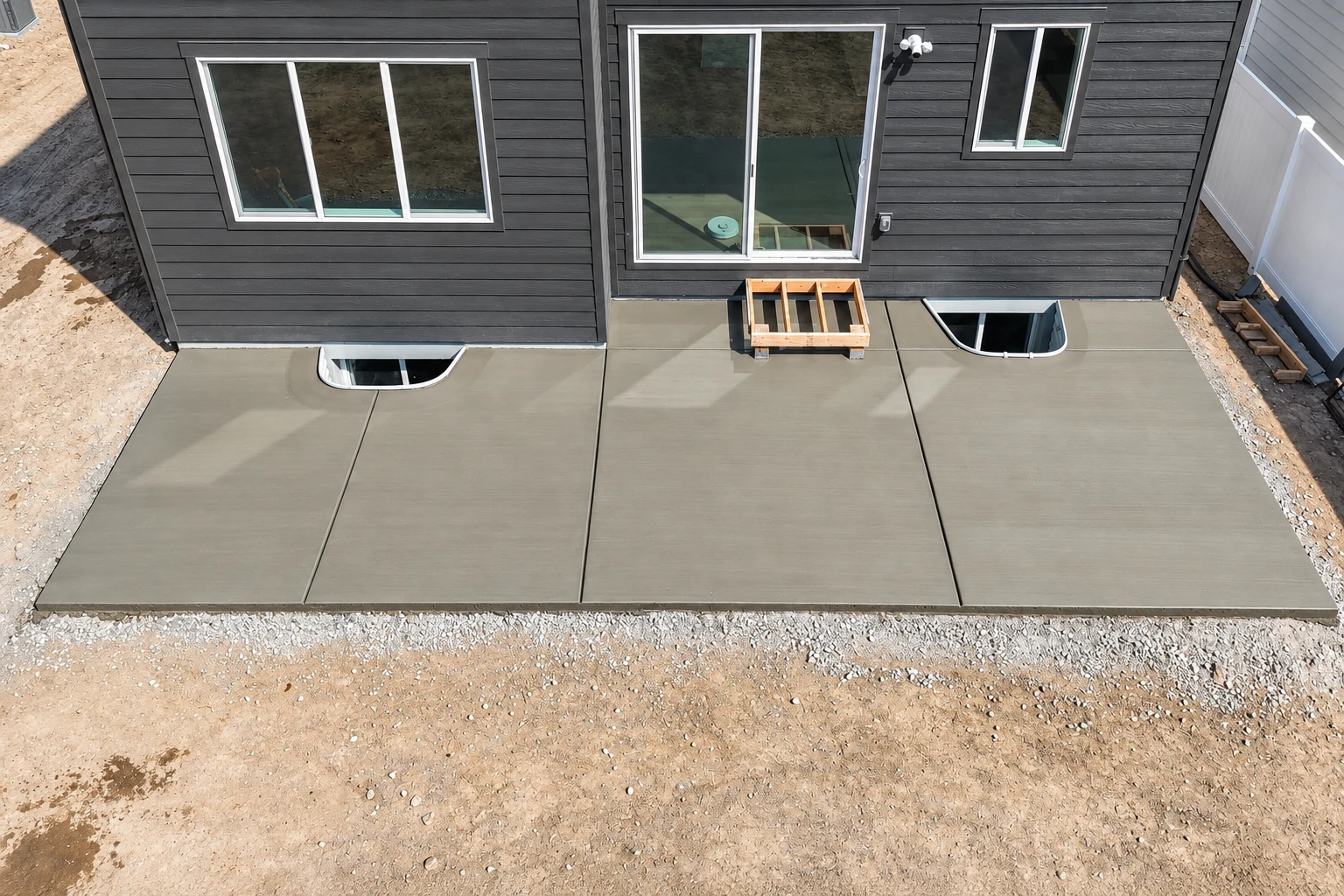
Brea has a little of everything we pour for. There are older homes on flat streets with long driveways, newer houses on sloped lots up toward Carbon Canyon, and shops and offices that need walks and parking. We're a concrete contractor based in Fullerton, right next door, and I come over the same way I head to Placentia or out to Cypress.
The ground decides the job here. On a flat lot it's mostly about breaking out the old slab and building a solid base, and on a slope it's about where the water goes, because a slab that falls toward the house sends runoff right at your foundation.
What moves the price and the schedule
Size and thickness come first, then what's already there. Breaking out an old cracked driveway and hauling it away costs more than pouring on bare ground, and a sloped lot means more digging, more forming and more base under the slab. Access matters too, since a backyard patio behind a narrow side yard may need a pump or wheelbarrows. A broom finish, the light brushed texture that keeps feet from slipping, costs less than stamped or decorative work. The schedule turns on curing, the wait while fresh concrete gains strength, so you'll stay off a new patio for a few days and keep cars off a driveway longer. I'll walk the job with you and put your number in a written estimate.
Why the base matters more than the finish
Water and dirt decide how long a slab lasts, so the first thing I look at on a Brea lot is where the water runs and what the subgrade, the ground the slab sits on, is made of. We dig it out, bring in base and pack it, instead of raking the old dirt level, because a raked base settles and takes the slab down with it. Then we set the slope so water runs away from your house. If the budget's tight, I'd rather trim the finish than the base, because a surface can be redone later and the ground under it can't without tearing it all out. We start slab foundations for additions and garages the same way.
Getting your property ready before we dig
SoCalGas says to call 811 before you dig, so we make sure buried lines are marked before our crew breaks ground. It helps to move cars, planters and anything stored along the side yard, and to tell us about sprinkler lines or an old drain you know is there, because those turn up when the old slab comes out. On a driveway, the apron where your lot meets the street gets the most care from me, since that's the work I learned pouring on a city crew. Before we leave, we clean the street and the gutter so they look the way they did when we pulled up.