
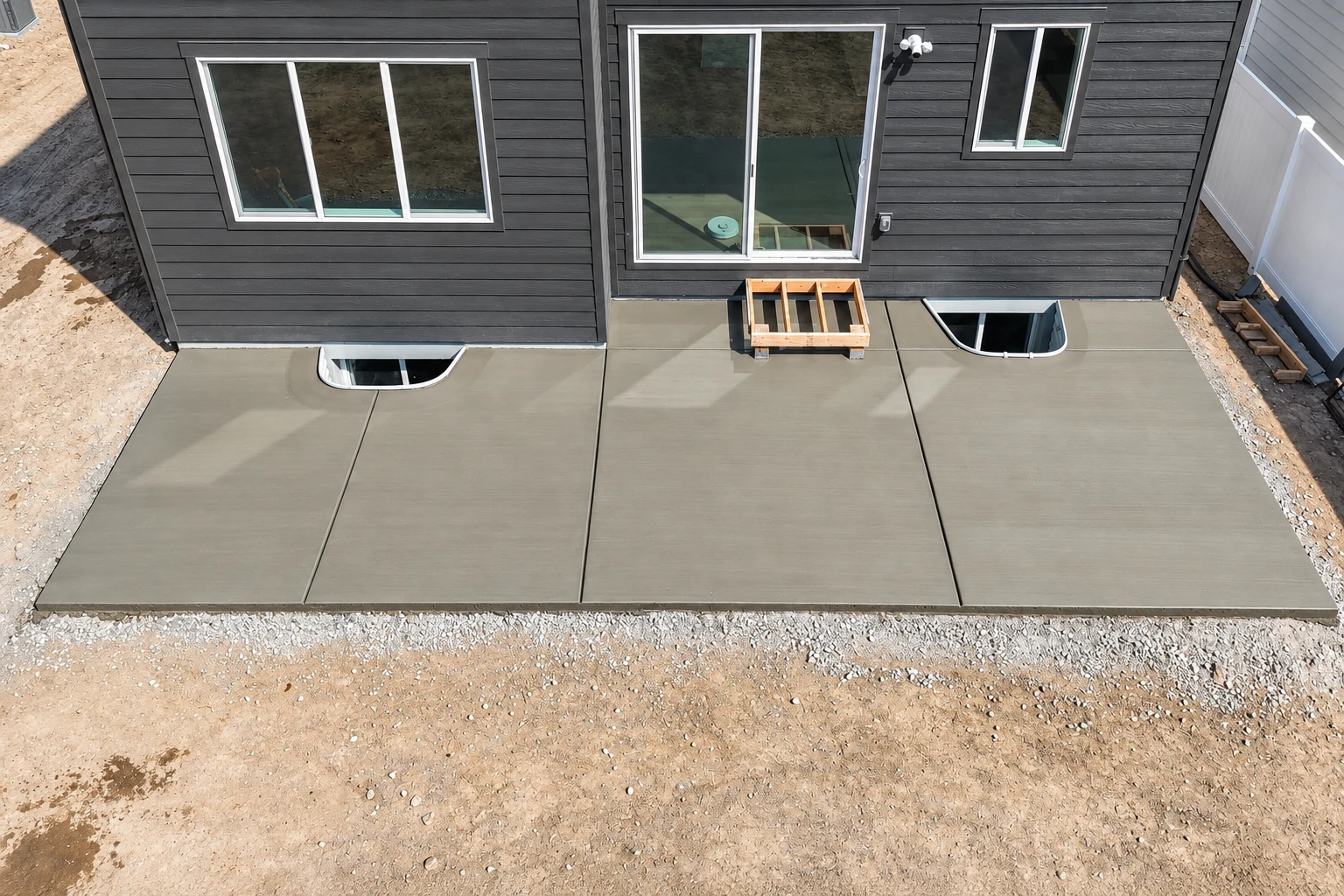
I started R&S Fullerton Concrete Construction here in 2020, and a lot of our calls in Fullerton are about driveways and walks that have cracked, sunk or started holding water. Plenty of the houses have been here a long time, so we often find old slabs, roots pushing up a sidewalk panel, or a driveway that tips toward the garage. We also pour for apartment owners and small commercial lots, where the work is the same but the slab carries more traffic.
We work all over Fullerton and the cities around it, including Anaheim and Brea. On an older lot, the dirt under a tired slab has usually settled or washed out, so I look at the ground before I talk about the surface.
What sets the price and the schedule
Price comes down to size, whether we're tearing out old concrete first, how much digging and base the ground needs, how easily a truck can reach the forms, and the finish. A plain broom finish, the light texture that keeps feet and tires from slipping, costs less than stamped or colored work. The schedule turns on weather, tear-out and whether the city wants a permit, and then on curing, the wait while fresh concrete gains strength before it can take a load. You're off a new slab on foot for a short while and off it with the car longer. I come out, look at the job and give you a written estimate for your own numbers.
Keeping the new slab from cracking like the old
Old slabs usually crack or sink because they sat on dirt that was raked level, not dug out and packed, so they settled with it. We dig out and pack the subgrade, the ground the slab sits on, and check where the water runs so the slab falls away from your house. Rebar, the steel laid inside, holds the pieces together if the slab does crack. We cut control joints, grooves that give the concrete a straight line to crack along, before cracks pick their own spot, and we don't pour in midday heat that leaves a weak, dusty top. If the budget's tight, I'd cut the fancy finish before the base, because you can't fix the ground once it's under concrete.
Driveway aprons, sidewalks and the gutter
I learned flatwork, the flat pours like sidewalks, curbs and driveways, on a city public works crew, and the spot where your lot meets the street is still what we're known for. The apron, the sloped piece between your driveway and the gutter, has to line up with the sidewalk and send water to the street instead of back toward the garage. We set forms to match what's already there so the new section doesn't leave a lip. When we leave, the street and gutter should look the way they did when we pulled up. If you're replacing the whole thing, our concrete driveway building page covers how that job runs.