




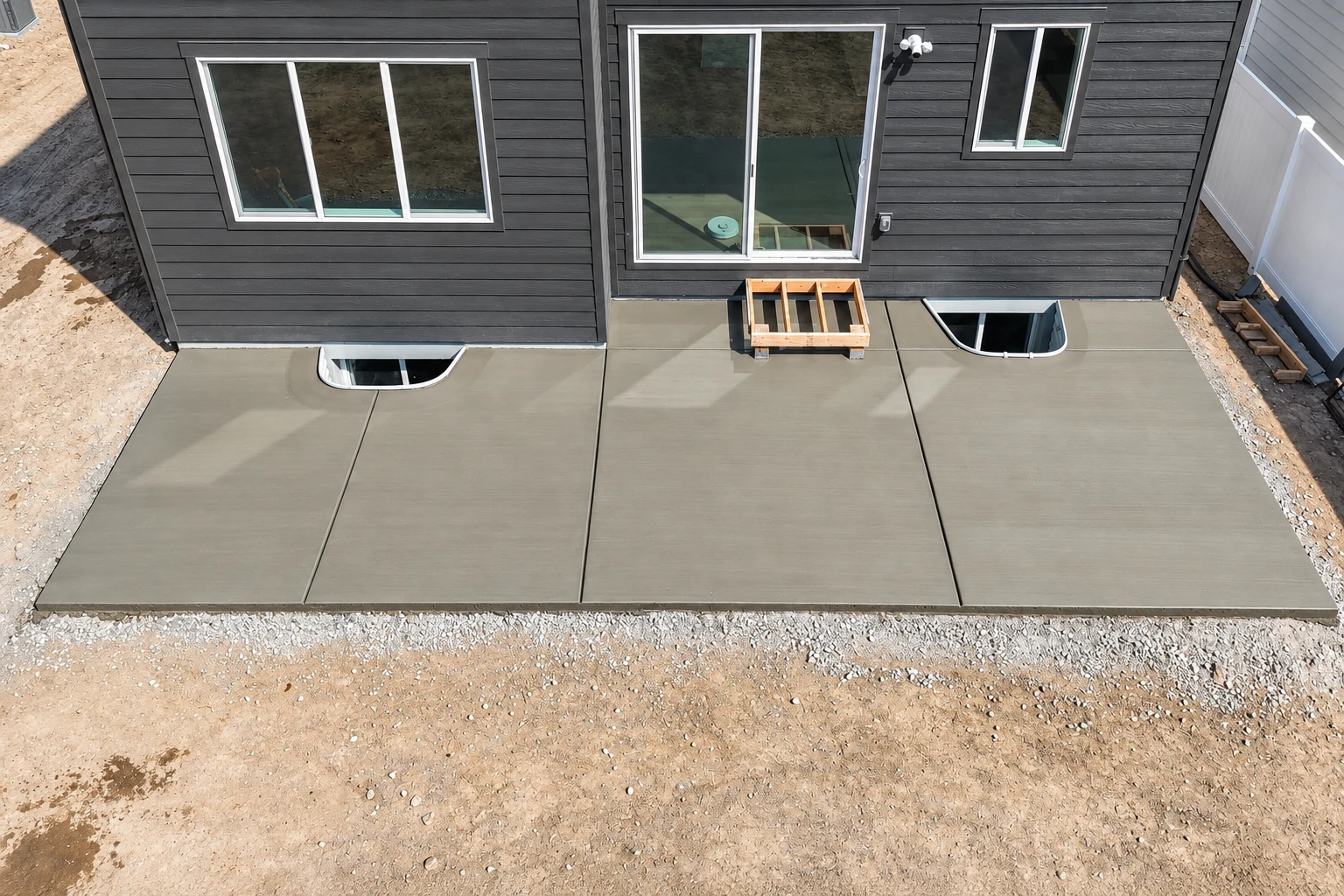
We're based in Fullerton, and Cypress is one of the cities around it where our crew pours flatwork, our word for flat slabs like driveways, patios, walks and garage floors. A typical call here comes from a street of single-family houses, where the driveway runs from the garage out to the curb and the old slab has cracked, sunk at the joints or started chipping. We see the same kind of street in Buena Park and Garden Grove, and since I started in 2020 a lot of my work has been right where a private lot meets the street.
When an old driveway comes out, the trouble is usually underneath. The dirt was raked flat instead of dug out and packed, or the slab tipped water back toward the garage. So on a Cypress job I look at the ground and where the water runs before we talk about finishes.
Checking whether your job needs a permit
The city's forms list names permits for other kinds of work, so it doesn't settle whether your driveway or patio needs one. When I'm not sure what the city wants, I ask the Building Division before I give you a price, so the permit is part of the number from the start. If the job needs one, we pull it ourselves and keep you posted on where it stands. The same list does carry requirements for adding a single-story room addition or patio cover, so if your plans include a new room or foundation installation, we'll go through those with you first.
What moves the price and the schedule
Price comes down to the size of the slab, how thick it needs to be, whether old concrete has to be broken out and hauled off, and how much work the subgrade needs, which is the ground the slab sits on. The finish counts too, from a plain broom finish, the light brushed texture that gives shoes and tires grip, up to stamped or colored work. The schedule turns on the tear-out, a permit if there is one, and curing, the days fresh concrete needs to gain strength before you use it. If the budget is tight, cut the finish, not the base, because nobody sees the base on day one and it decides whether the slab stays put.
Leaving the street and gutter clean
The city's guidance says every construction project has to follow, at a minimum, the best management practices in its Construction Runoff Guidance Manual, which are the site practices for keeping a job's runoff in check. That matters on a driveway because the work ends at the curb, and slurry, washout and broken concrete head straight for the gutter if nobody's watching. I learned on a city public works crew, where the curb and gutter were part of the job and not somebody else's problem. We keep our washout off the street, haul the old concrete away and sweep the curb before we leave, so the street looks the way it did when we got there.